Aftertouch: Mimosa Pudica
Crystal Z Campbell
September 18 – October 30, 2026
106 College St
Buffalo, NY 14201
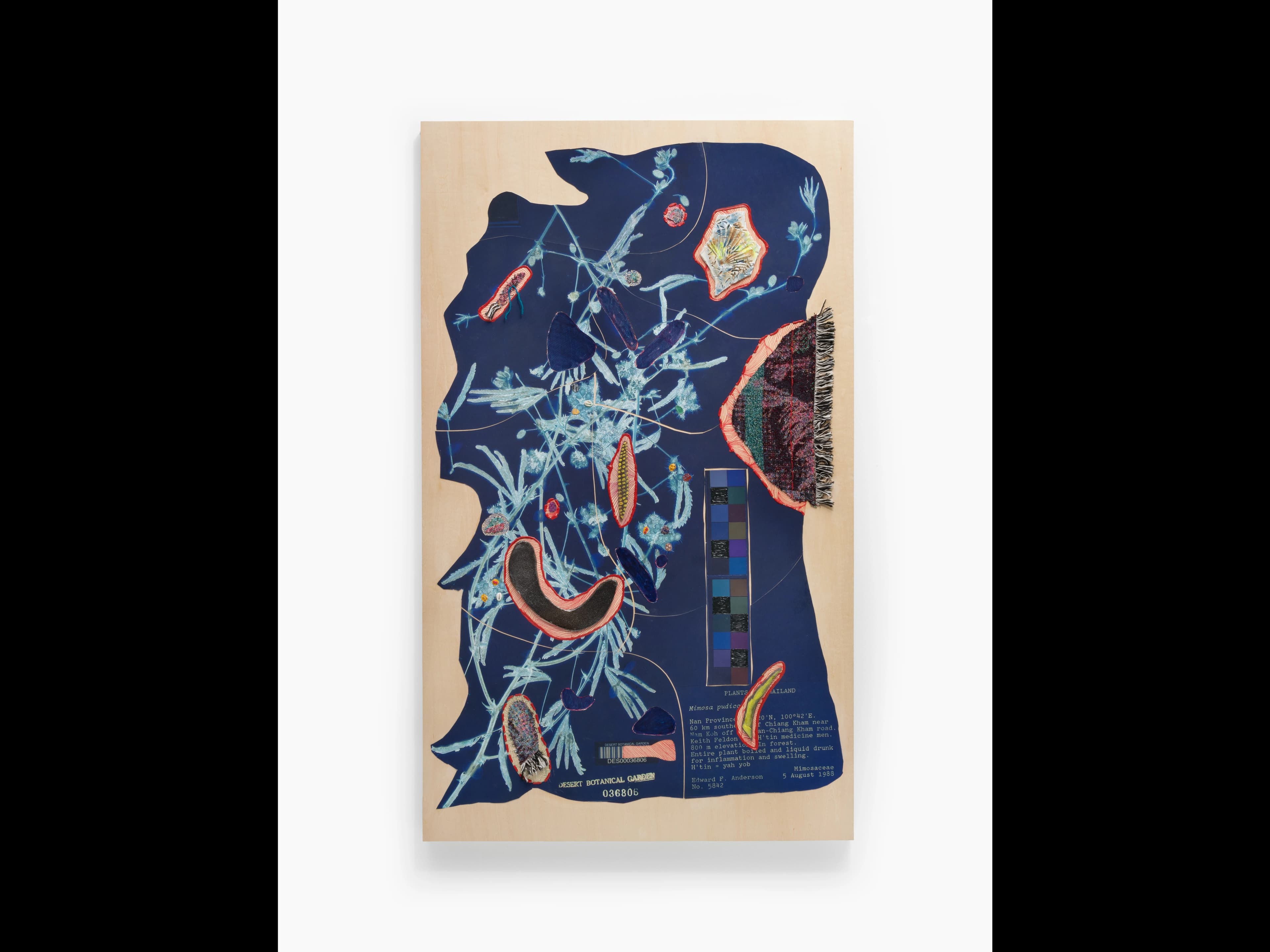
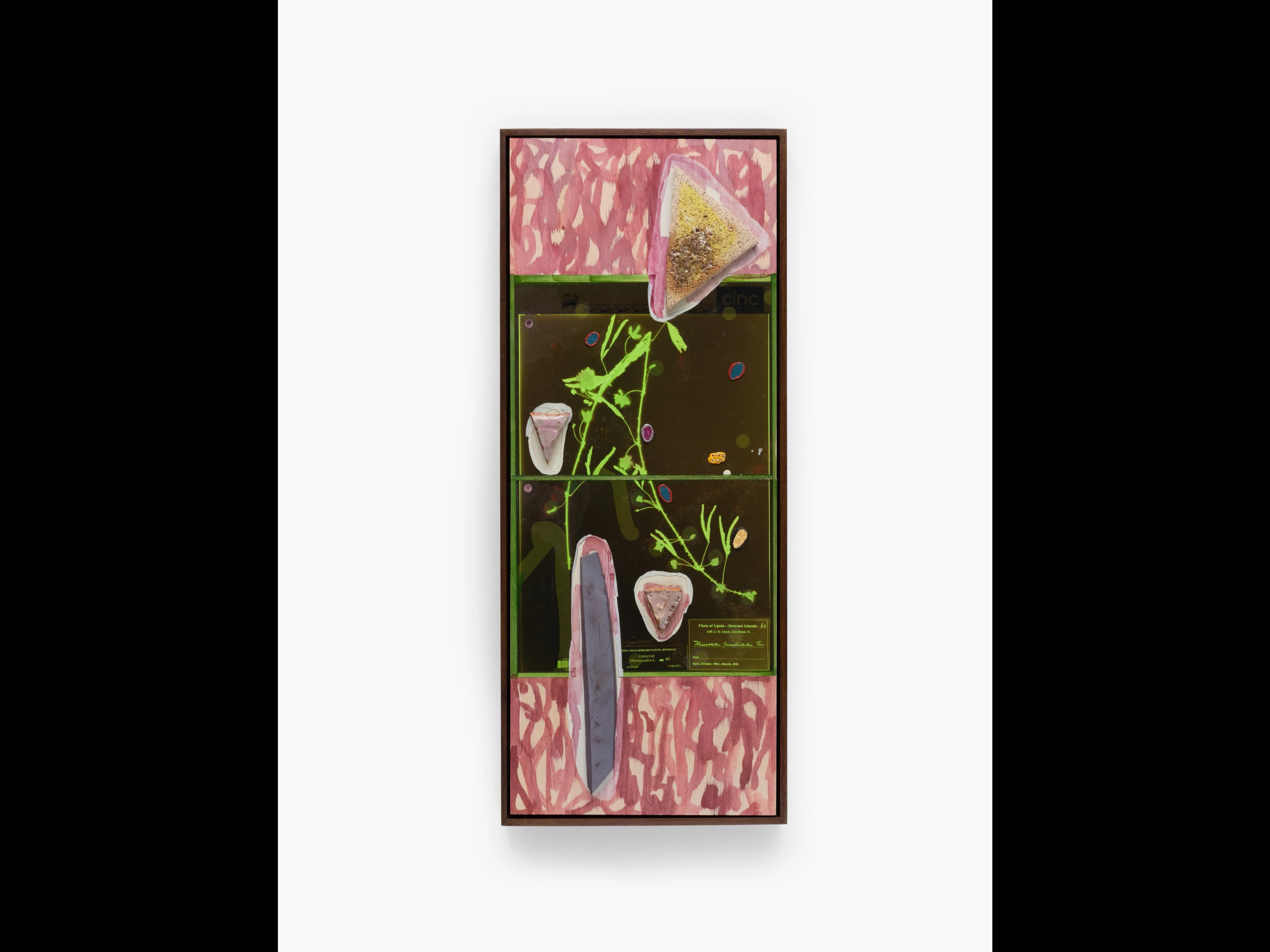
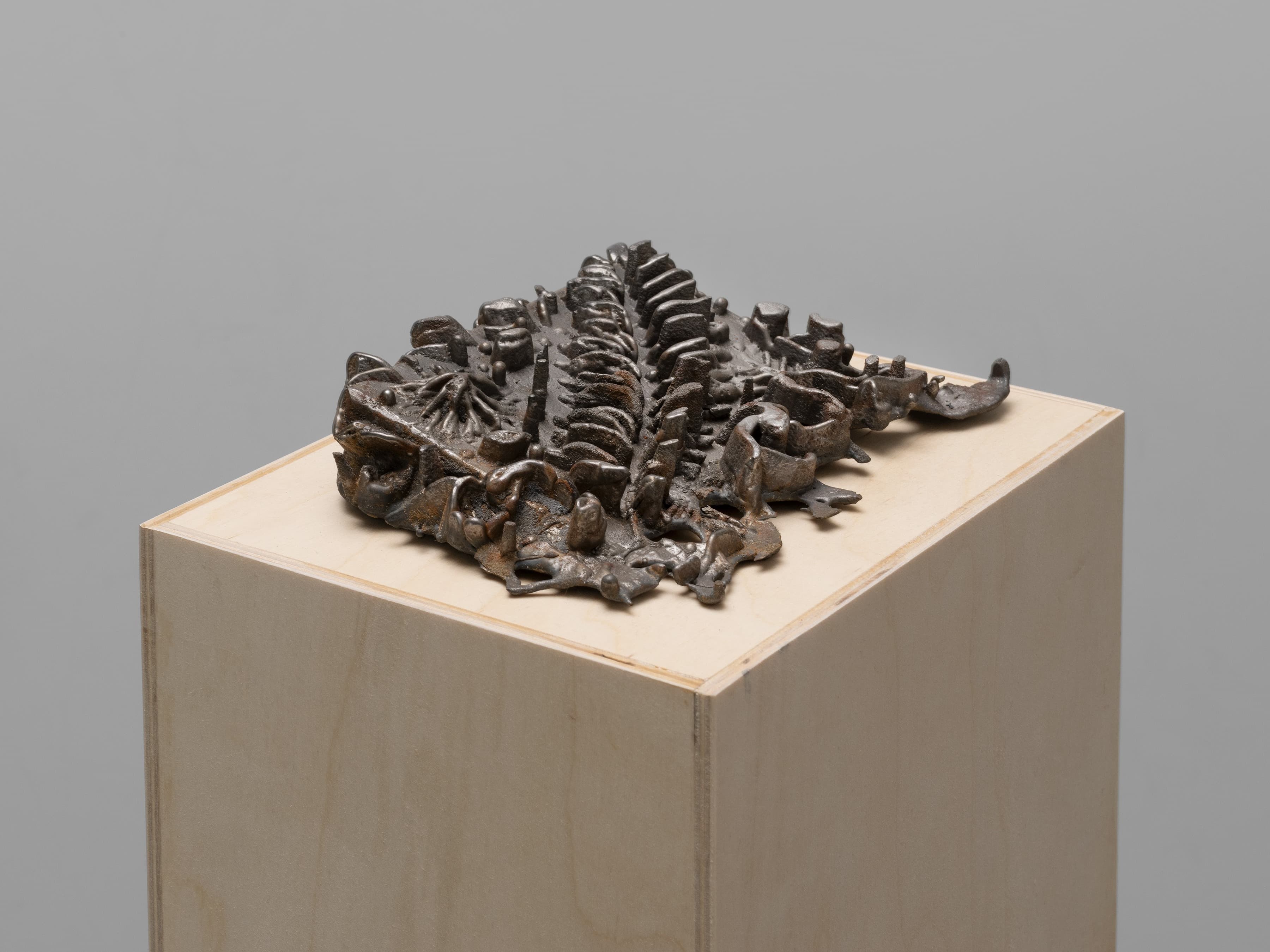
Rivalry Projects is thrilled to present Aftertouch: Mimosa Pudica, the gallery’s first exhibition with Crystal Z Campbell. The presentation will debut a new series of paint and photo-based collages, alongside cast bronze and iron sculptures that examine global herbarium specimens of the mimosa pudica - an abundant, touch sensitive plant, with medicinal and sentient properties. Native to South and Central America, but now found in tropical climates around the world, the history of mimosa pudica is grounded in anthropomorphization, colonial touch, and scientific experimentation. Together, the works in the exhibition expand upon these histories to speak to contemporary ripples of colonialism, extraction, and empire.
Crystal Z Campbell’s creative practice spans visual art, experimental film, and writing to explore what they’ve termed as the ‘underloved’ - the histories, peoples, places, and public secrets that are known by many but unspoken. Their artistic research originates from investigations into archives, digital collections, and online repositories, paying attention to the underloved that are buried within institutional memory or exist beyond those bounds.
On a trip to their mother’s homeland in the Philippines, Campbell first encountered the mimosa pudica plant after noticing a subtle movement beneath their feet. Largely considered a weed by Western standards, the plant is affectionately called ‘Makahiya’, which in Tagalog translates to ‘shame’ or 'shyness’. The plant is said to have been introduced by Spanish colonizers to the Philippines through the Manila-Acapulco Galleon trade, which bridged South America and Asia from 1565-1815. Over time, it has earned many classifications, from an abundant weed, to an anti-inflammatory medicinal aid, to a learned and sentient being that exists in the liminal space between plant and animal categorizations. The petioles of the mimosa pudica plant retreat when touched, pushing scientists to use the plant as a gateway to understand the intelligence and memory of organic plant life. Nevertheless, the plant’s capacities for memory and intelligence were tested through violent strategies - sunlight deprivation, striking the leaves repeatedly, and dropping the plant from heights to test if the leaves retained memories of the fall.
Each collage in the series is derived from an herbarium specimen - from Mexico, Jamaica, the Philippines, and the US states of Hawaii and Florida. Mimicking the archipelagic structure of the Philippines, each specimen has been cut into numerous fragments to suggest a whole. The mimosa pudica samples depicted in each image have been subjected to colonial violences of uprooting, followed by dehydration, and being affixed to a sheet of paper. Despite many traditional medicinal uses of the plant, the specimens are far removed from that history and are named and marked by their archive, site of removal, collector, and often barcoded like merchandise - reflecting on the colonial practice of bioprospecting wherein a region's natural resources were scanned to maximize extraction and commercialization.
The original plant records morph into abstracted vibrant collages on wooden panels, accented by haptic invitations of thick acrylic paint, handmade ceramic talismans, home-grown crystals, and leather and jacquard woven fragments. Newly cast bronze and iron sculptures of mimosa pudica renderings provide a physical counterbalance to these hybrid photographic records. Campbell’s interventions speak back to the notion of the still life genre, while the mimosa pudica acts as agent, transmitter, and witness disrupting colonial amnesia and offering another lens to examine the explicit and implicit residues of colonial touch.
Special thanks to Leticia Bajuyo, Andy Denton at the University of Oklahoma for supporting bronze and iron casting, Stuart Asprey and Marissa Childers at University of Oklahoma for access to ceramic production, David Fernan for transport, Chris Siano for pedestal fabrication, and the Campbell Family for logistical and moral support.
About the Artist
Crystal Z Campbell (b. 1980, Prince Georges County, MD). A 2021 Guggenheim Fellow in Fine Arts, Campbell is a visual artist, experimental filmmaker, and writer of Black, Filipinx, and Chinese descents whose archive-driven works engage historical perception, psychogeography, and the underloved.
Campbell’s visual art and films have exhibited and screened internationally: MOMA , European Media Arts Festival, SFMOMA, Chicago International Film Festival (Silver Lion), National Gallery of Art, The Drawing Center, ReMai Modern, Berlinale International Film Festival, MIT List Visual Arts Center, REDCAT, Gallerie im Turm, SculptureCenter, International Film Festival Rotterdam, Walker Art Center, ICA-Philadelphia, Studio Museum of Harlem, Bemis, Nest, Semana Cinema de Negro, Knoxville Museum of Art, New Orleans Film Festival, BLOCK Museum and others.
Recent solo exhibitions include Artists Space, St. Louis Art Museum, Memorial Art Gallery, and a forthcoming exhibition in Fall 2027 at Harvard Radcliffe Institute. They were a featured filmmaker at the 67th Flaherty Film Seminar programmed by Almudena Escobar López and Sky Hopinka, and their film REVOLVER received the Silver Hugo at the Chicago International Film Festival (an Academy Award Qualifying Festival). Other honors include a 2024 NYFA/NYSCA Fellow in Film/Video, 2022 Creative Capital Award, Harvard Radcliffe Film Study Center & David and Roberta Logie Fellowship, Pollock-Krasner Award, MAP Fund, MacDowell, Mid-America Arts Alliance, Skowhegan, Rijksakademie, Whitney ISP, Franklin Furnace, Tulsa Artist Fellowship, Black Spatial Relics, and DUKE DocX Fellowship. Campbell’s writing is featured in two artist books published by Visual Studies Workshop Press, World Literature Today, Monday Journal, GARAGE, and Hyperallergic.
Campbell’s work is in the permanent collections of MIT List Visual Arts Center, Memorial Art Gallery, Philbrook Museum, Gilcrease Museum, Duke University, Harvard University, the Beth Rudin DeWoody collection, and other private collections in the US and Italy. Campbell is currently an Associate Professor in Art and Media Study at the University at Buffalo and visiting MFA faculty at Bard College who lives and works between Oklahoma and New York.